How to Track Bitcoin Hashrate Growth to Measure Network Security

Introduction
Bitcoin’s price often gets all the attention, but one of the most important indicators of the network’s strength is something most people never look at: hashrate.
Hashrate represents the total computing power miners use to secure the Bitcoin network. The higher the hashrate, the more computational work is protecting the blockchain, which makes it significantly harder for any attacker to manipulate transactions or rewrite history.
Tracking hashrate over time gives you a deeper understanding of how strong, secure, and active the Bitcoin network really is.
Step 1: Open the Bitcoin Hashrate Chart
Go to:
https://www.blockchain.com/explorer/charts/hash-rate
This page provides a visual chart showing the estimated total hashing power securing the Bitcoin network.
The chart is updated regularly and allows you to observe how mining activity changes over time.
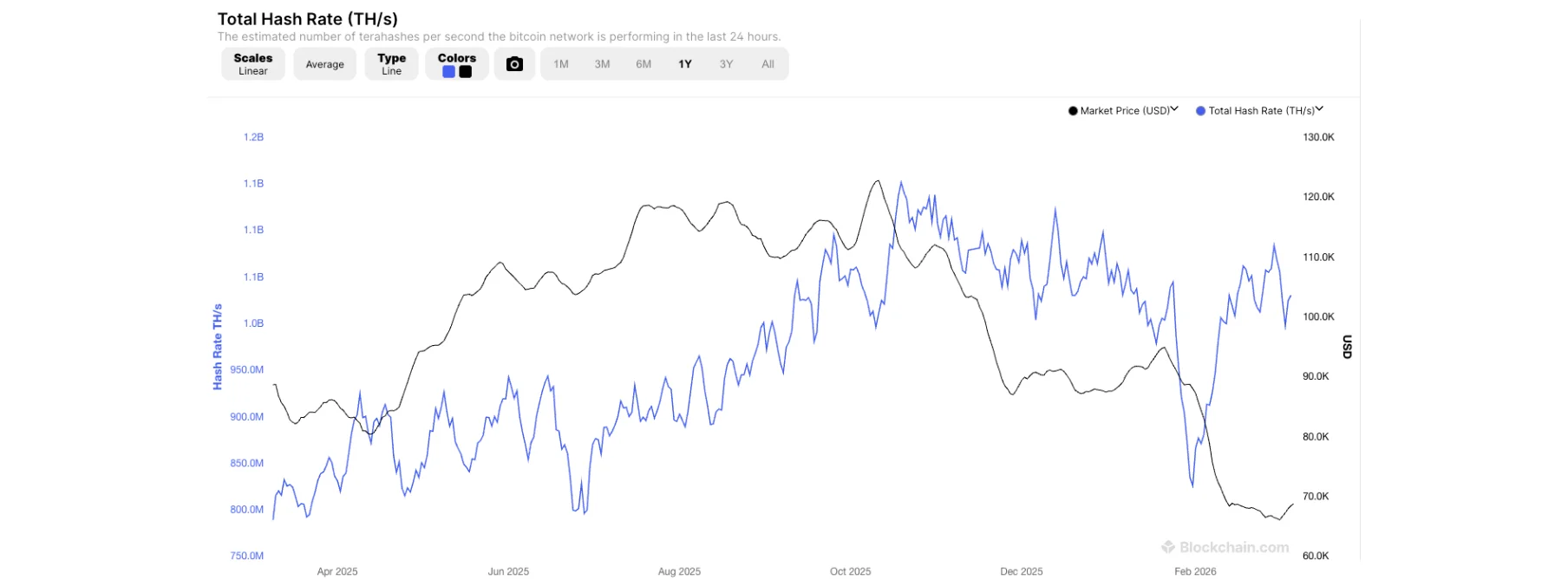
Step 2: Analyze the Hashrate Chart
When the page loads, you’ll see a chart titled “Total Hash Rate (TH/s)”. This chart displays two main lines:
Blue line: Total Bitcoin hashrate (the network’s mining power)
Black line: Bitcoin market price (USD)
The left side of the chart shows the hashrate scale, while the right side shows the Bitcoin price scale. This dual-axis view allows you to see how mining power and price move relative to each other.
You can also change the timeframe above the chart (for example 1M, 3M, 6M, 1Y, or All) to zoom in or out and analyze longer periods of network growth.
What makes this chart particularly useful is how it shows the relationship between mining incentives and network security. When Bitcoin’s price rises, mining typically becomes more profitable, encouraging more miners to join the network and increasing total hashrate. When the price drops, some miners may temporarily shut down operations, causing small declines.
Over longer periods, however, Bitcoin’s hashrate has historically trended upward. This reflects growing mining infrastructure, more advanced hardware, and increasing global participation in securing the network.
In addition, if you would like to learn How to Use the Bitcoin Rainbow Chart to Understand Market Cycles, check it out on the Bitcoin Everlight education section.
Why Hashrate Matters
Hashrate is one of the clearest indicators of Bitcoin’s security.
A higher hashrate means more computational power is protecting the blockchain, making it extremely difficult and expensive for any single entity to attack the network. In practical terms, it shows how much real-world energy and hardware are committed to maintaining Bitcoin’s integrity.
It also reflects the economic incentives behind mining. When miners invest in equipment and electricity, they are effectively betting on Bitcoin’s long-term viability. Rising hashrate can therefore signal confidence from participants who are directly securing the network.
Because of this, analysts often look at hashrate growth as a structural metric rather than a short-term trading signal.
Conclusion
While price charts show how the market values Bitcoin, hashrate shows how strongly the network is being protected.
By tracking Bitcoin’s hashrate growth, you gain insight into the expanding infrastructure behind the blockchain and the level of computing power committed to securing it. Over time, sustained increases in hashrate reflect a stronger, more resilient network supported by miners around the world.